CASS
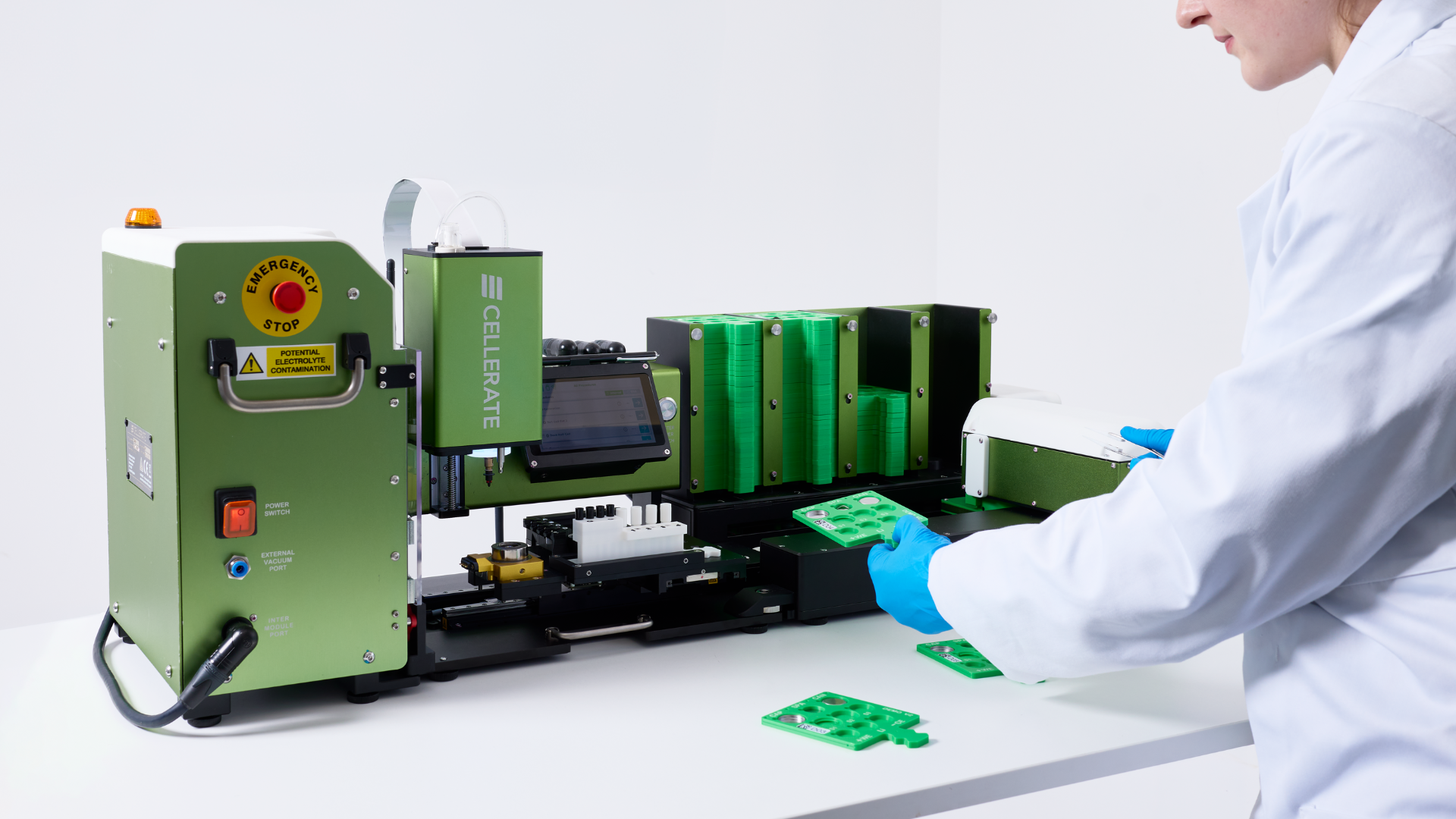
Automated Coin Cell Assembly
Precision Robotic Assembly for High-Quality Battery Cell Data
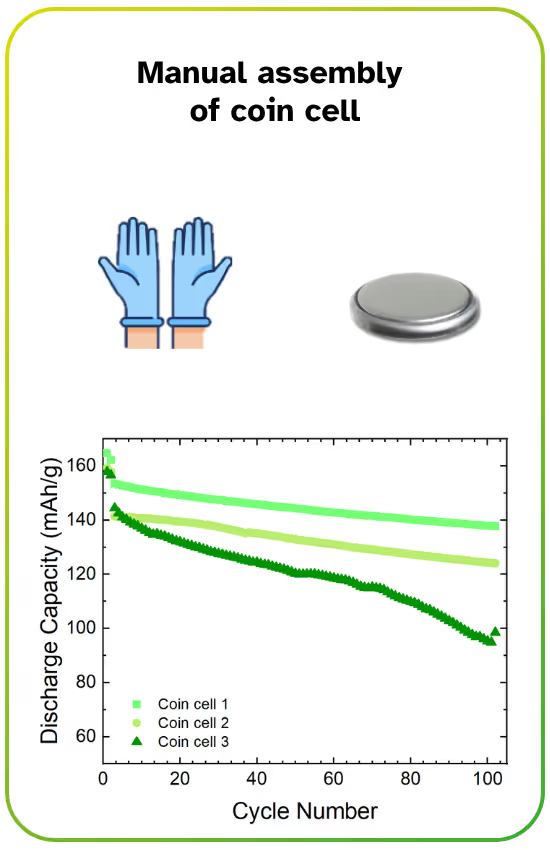
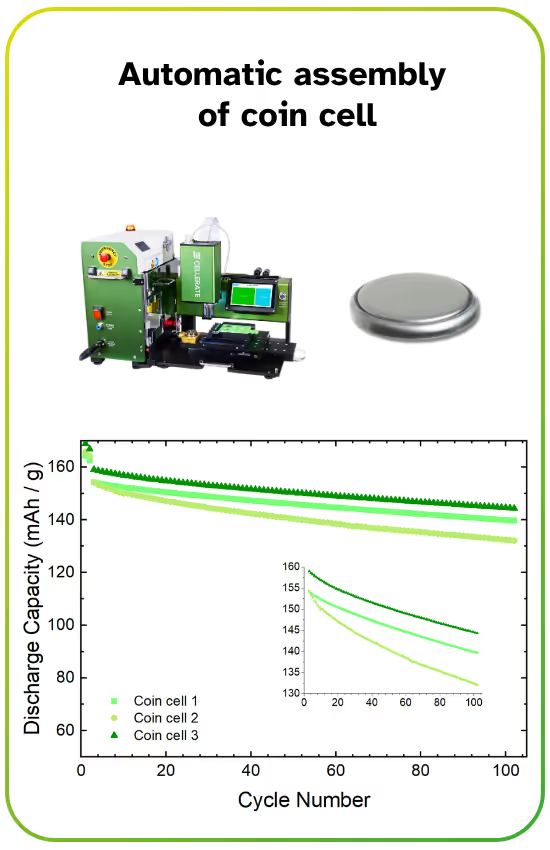
The CASS is an automated platform designed to assemble and seal coin cells and single-layer pouch cells with exceptional consistency. By replacing manual assembly with precision robotics, the CASS enables laboratories to improve repeatability, reduce human variability, and increase throughput. Designed specifically for battery research environments, the CASS supports structured workflows that produce reliable, comparable cell data at scale.
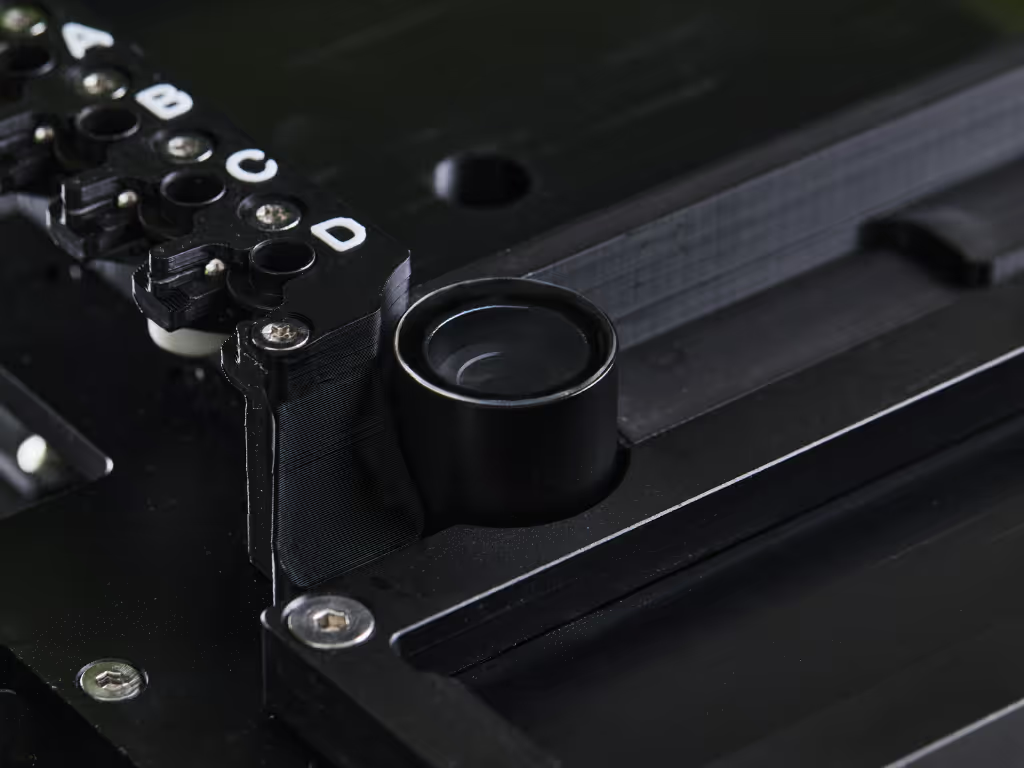
Machine Vision Electrode Alignment
The system uses a patented, high-definition vision processing unit to ensure each electrode is correctly aligned before sealing. The high-definition cameras log the build of every cell for quality control.


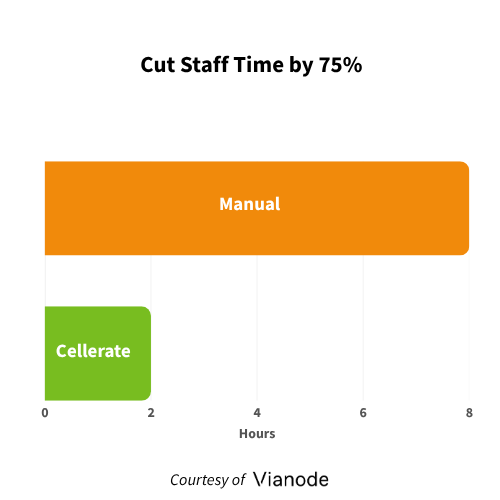
Convert Untrained Technicians Into Battery Experts
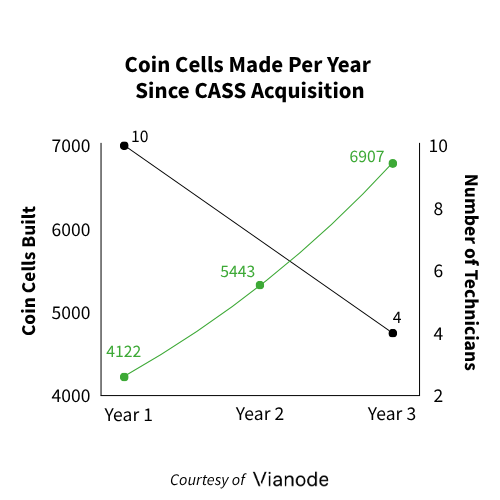
With the CASS, it only takes 2 weeks to convert your new, untrained technicians into proficient battery production and testing operators. With new users producing batches almost as good as experienced users after just two days.
.avif)
Designed for Coin Cells & Pouch Cells
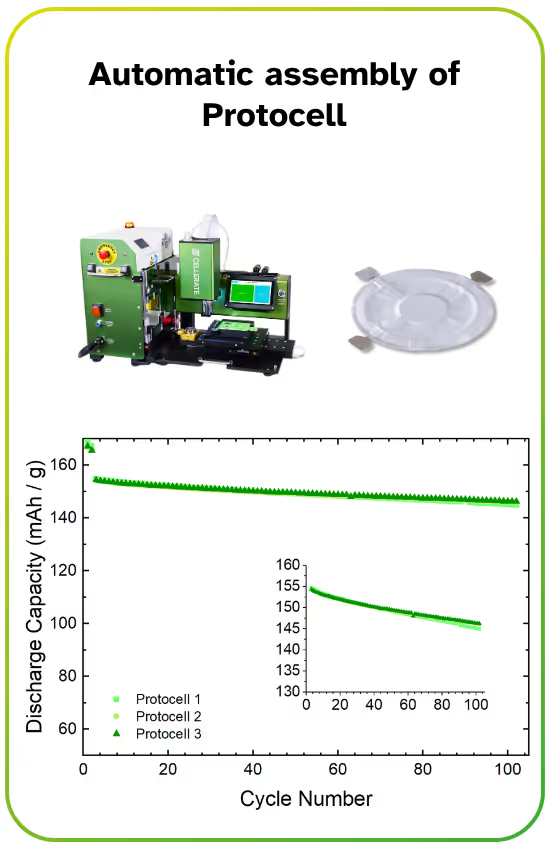
The CASS is designed for the fully automated assembly of coin cells and Protocells - Cellerate’s single-layer pouch cell format - enabling consistent, high-quality test cells with minimal operator input.
Protocells are developed specifically for automated assembly, allowing you to move beyond basic coin cell testing while maintaining the repeatability and throughput required for reliable data generation.
For larger pouch cell formats, the Sealer module can be used as a standalone unit, allowing you to seal a range of pouch formats depending on your requirements.
Module Configurations
Designed for ease of scalability, the modular approach allows the system to scale with the laboratory requirements.
From individual cell builds to fully automatic batch production.
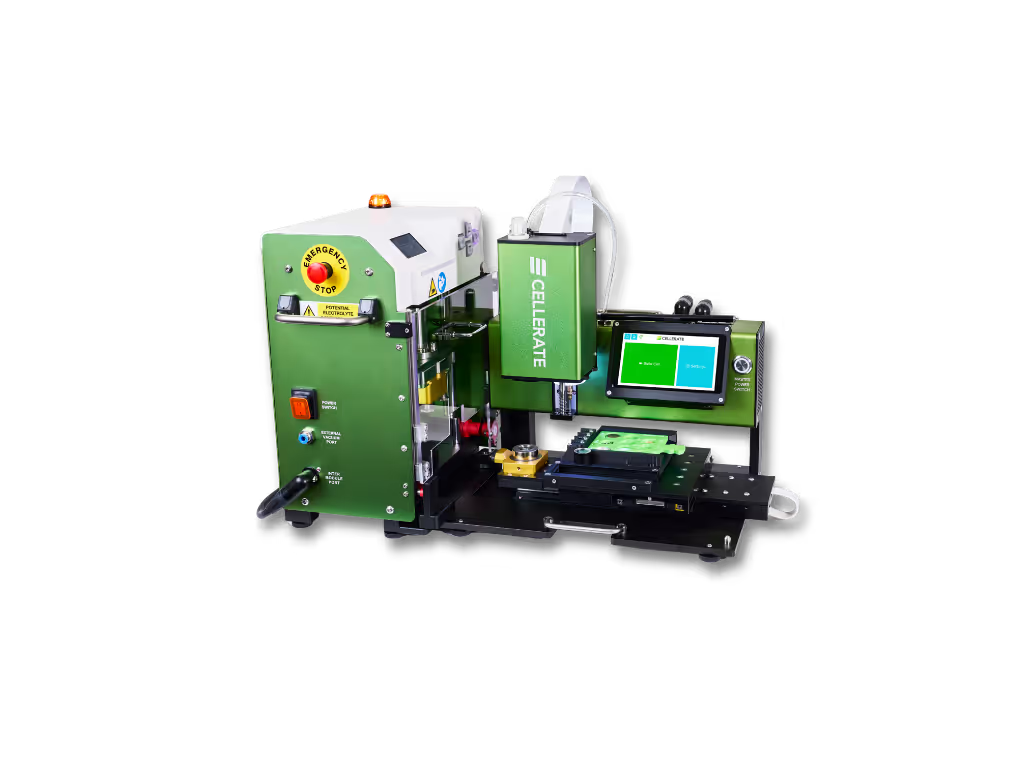
CASS: Sealer + Assembler
The first step into automated cell assembly, the Sealer and Assembler combination allows for precision cell assembly of coin cells using active optical alignment and precise stage control.
- Patented optical alignment system allowing for less than 100um electrode overlay error
- Flexible electrolyte dispensing using an electronic micropipette
- Vision logging and traceability of every build step
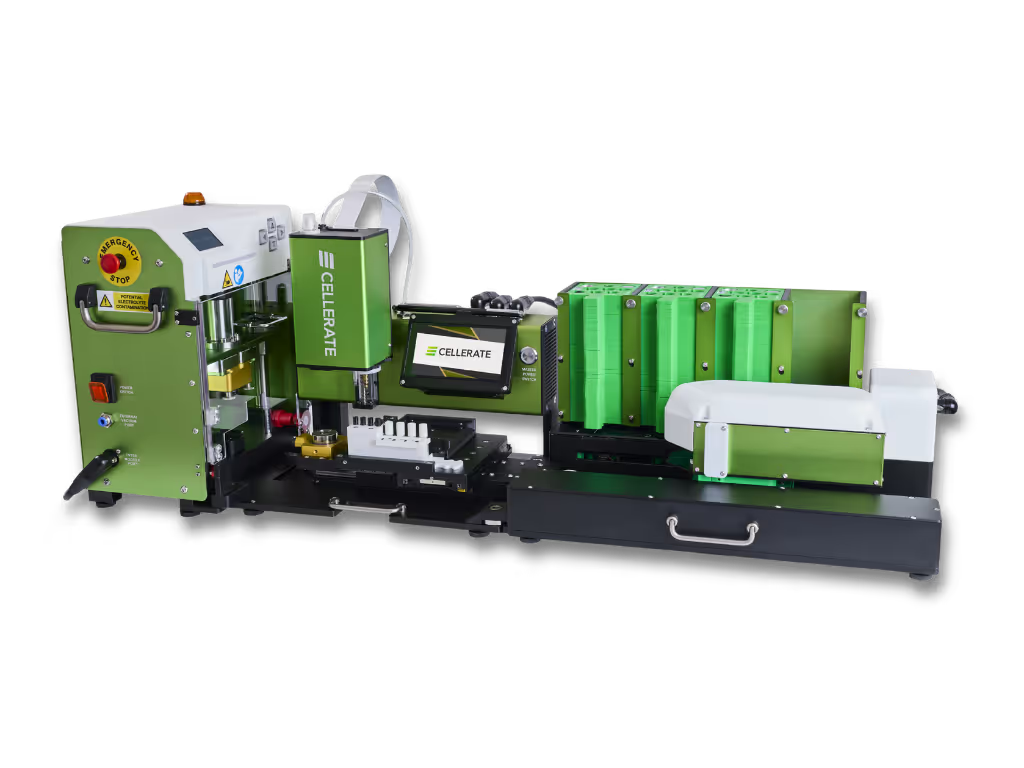
CASS: Sealer + Assembler + Autoloader
The addition of the Autoloader module allows you to significantly scale production, unlocking the capability to reliably produce up to 100 prototype cells, completely unattended.
- Reduce the time spent building coin cells by up to 95%
- Total setup time of around 1 hour for 100 cells
- Scale up your automated cell assembly processes
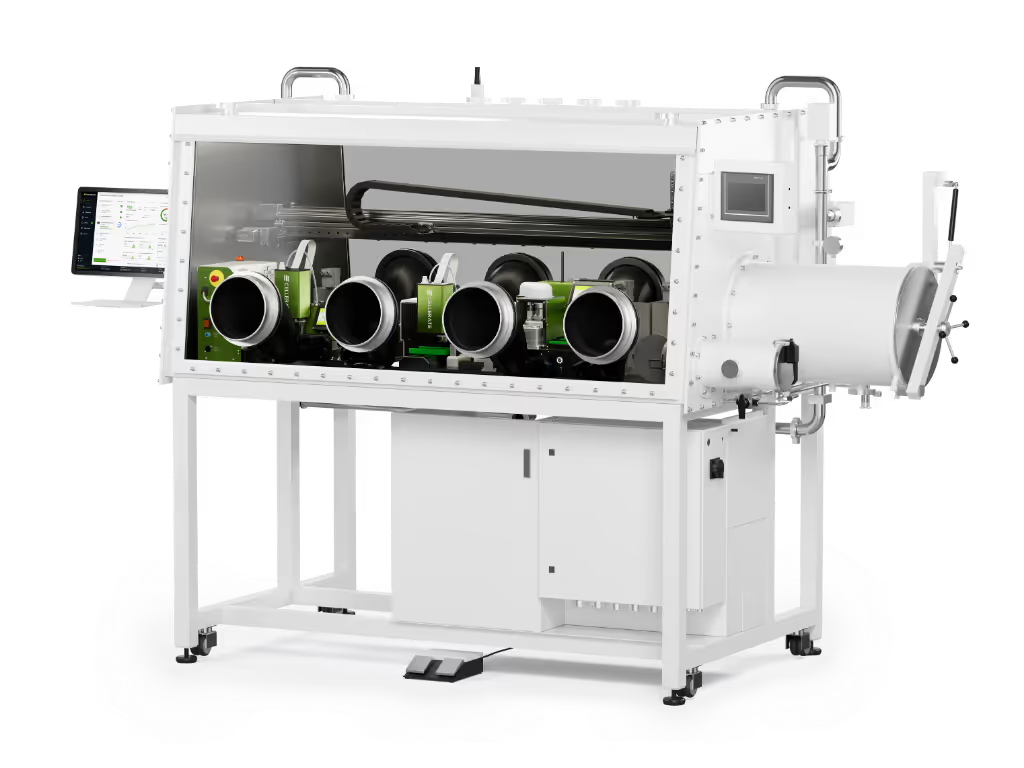
CASS-IQ
CASS-IQ brings together Cellerate’s CASS and E-PREP technologies in a bespoke, turnkey cell production system for battery labs ready to scale. Intended for workflows above 100 cells per day, it helps teams automate more of the process, generate larger and more consistent data sets, and build cells more efficiently for both research and quality control.
- Tailored to your workflow, from electrode foils or sheets, to finished cells
- Greater automation and higher-volume production with repeatable cell assembly
- Ideal for large research campaigns, data generation, and QC testing
Explore CASS Modules
The CASS is modular by design. Learn more about the individual modules below.
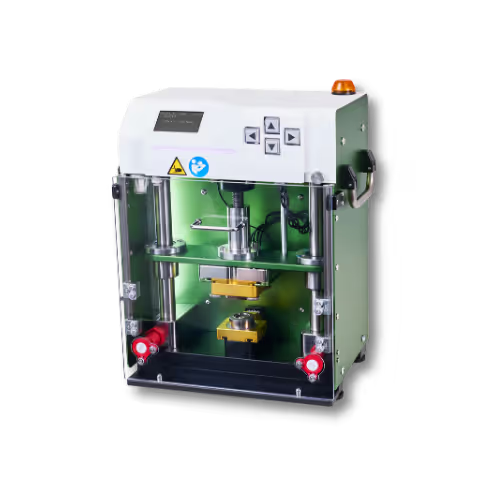
Sealer Module
The Sealer module allows for the crimping of coin cells as well as the vacuum sealing of Protocells and single-layer pouch cells. The rapid exchange of the sealing dies allows for the multifunctionality in a small footprint.
- Can seal coin cells and pouch cells
- Pouch cell vacuum sealing using integrated vacuum pump
- Rapid die exchange for sealing different cell types
- Fully digital interface and control systems
- Can be used as a standalone system
Specifications
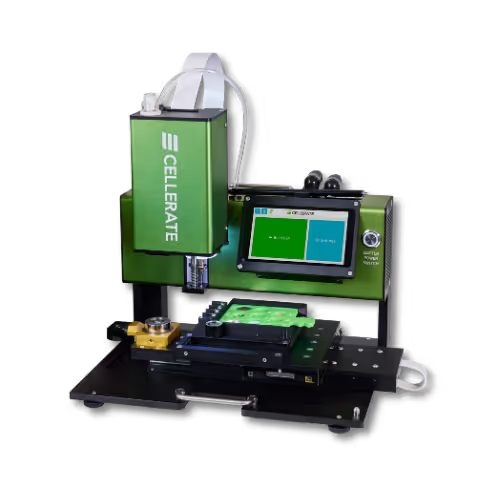
Assembler Module
The Assembler module uses machine vision to accurately stack cell components. Assemble cells with precision, in fully or semi-automated modes.
- Assemble both coin cells and Protocells
- Less than 0.1 mm component misalignment
- Automatic swapping between vacuum heads and micropipette tips to minimise cross-contamination
- Cell build quality report automatically generated
Specifications
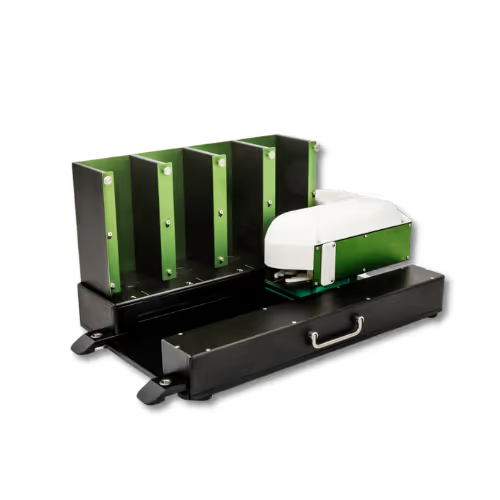
Autoloader Module
The Autoloader module enables 100 cells to be built unattended as standard, and can be expanded to build more.
- Make every cell unique to explore parameter space
- Create, save, and load cell build routines for batch cell building
- Build 100 cells automatically using tray loading mechanism
- Set-up time approximately 1 minute per cell
- Compatible with both coin cells and Protocells
Specifications
FAQs
What cell formats and cell sizes can the CASS make?
The CASS can make any size coin cell. It can also make single-layer pouch cells with up to 50 x 70 mm electrodes, including custom geometries.
What is a Protocell?
A Protocell is essentially a coin cell in a pouch casing. This format enables users to control the pressure more precisely, and add a reference electrode (third electrode) to see how the voltage of each electrode changes individually while charging and discharging. Find out more about Protocells.
What is the throughput of the CASS?
The throughput of the CASS depends on the build configuration, but on average, it is 2.5 to 5 minutes per cell, so 12 to 24 cells can be built per hour.
Can the output data be accessed remotely?
Yes, the system can be accessed remotely over the local network, and a third party LIMS can pull the data through a Python script.
What external services does the CASS require?
The CASS only requires a 'standard' 110-240V mains power source. No compressed air or external vacuum pump is required. The CASS can also connect to a local network via wifi or ethernet.