
E-PREP
Electrode Punching System
Automate Your Electrode Preparation for Superior Battery Research
The E-PREP is an automated platform designed to prepare electrodes for battery research with consistent precision. It integrates electrode cutting, weighing, thickness measurement, and resistivity measurement into a single workflow, reducing manual handling and improving repeatability.
Developed in collaboration with the Centre for Process Innovation (CPI), the E-PREP streamlines the preparation of electrodes for coin cells and small pouch cells, helping laboratories produce reliable, high-quality samples for cell assembly and testing.
E-PREP
The E-PREP is ideal for battery R&D labs, quality control facilities and material testing environments.
Punching
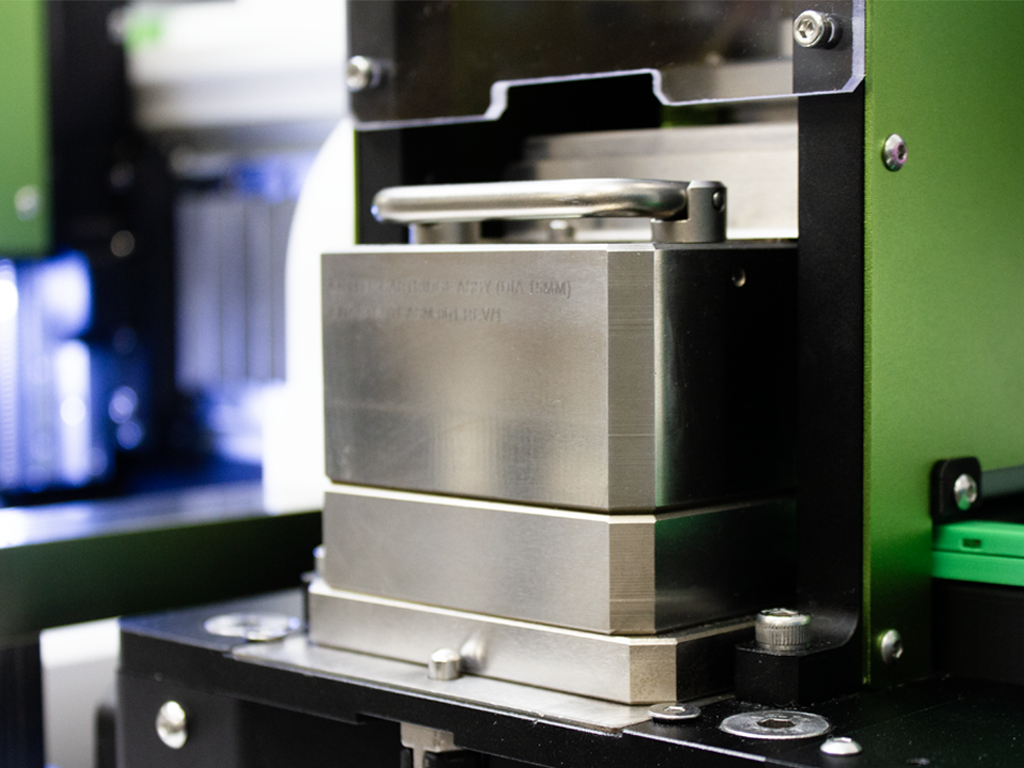
The punching enables automated preparation of electrodes for coin cells and small pouch cells, supporting both disc formats and custom geometries.
Tool: EDM-manufactured cutting die
Radial Contour Tolerance: 2 μm
Input Sheet Dimensions (max): 150 x 100 mm
Cut Geometry: Up to 20 mm diameter discs (alternative systems available for rectangular cells)
Thickness
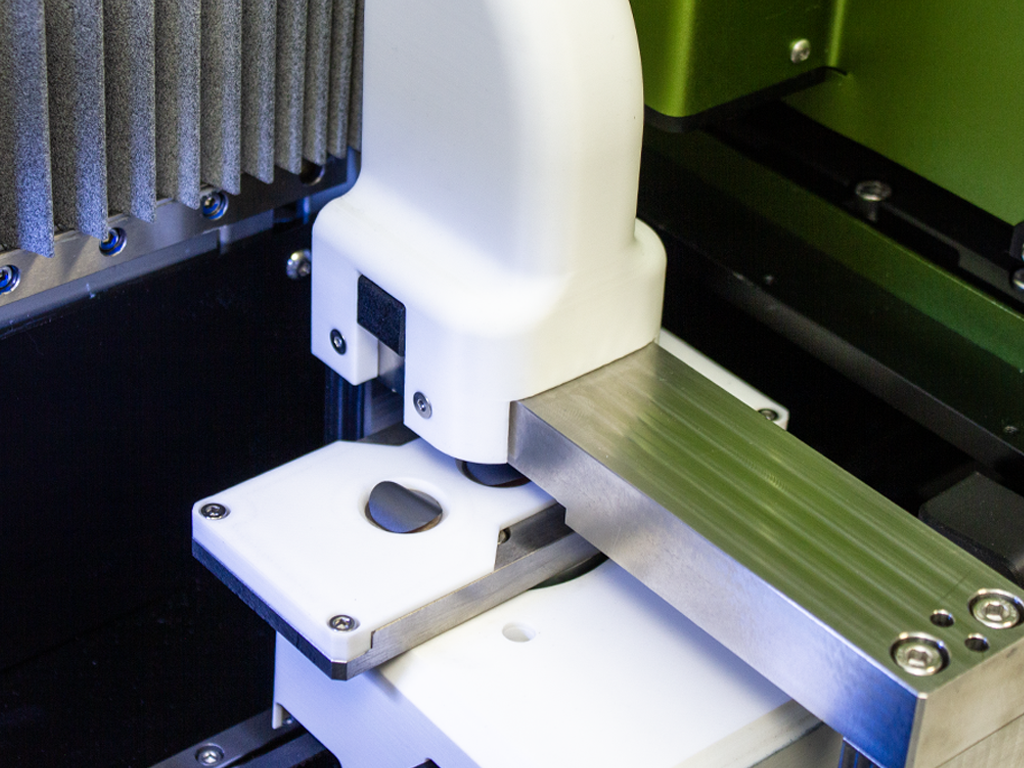
The thickness measurement enables accurate electrode thickness capture to support reliable data analysis and repeatable research workflows.
Probe: Micro-Epsilon DTD-1G8
Resolution: 1 μm
Accuracy : ± 1 μm
Repeatability: ± 1 μm
Weighing
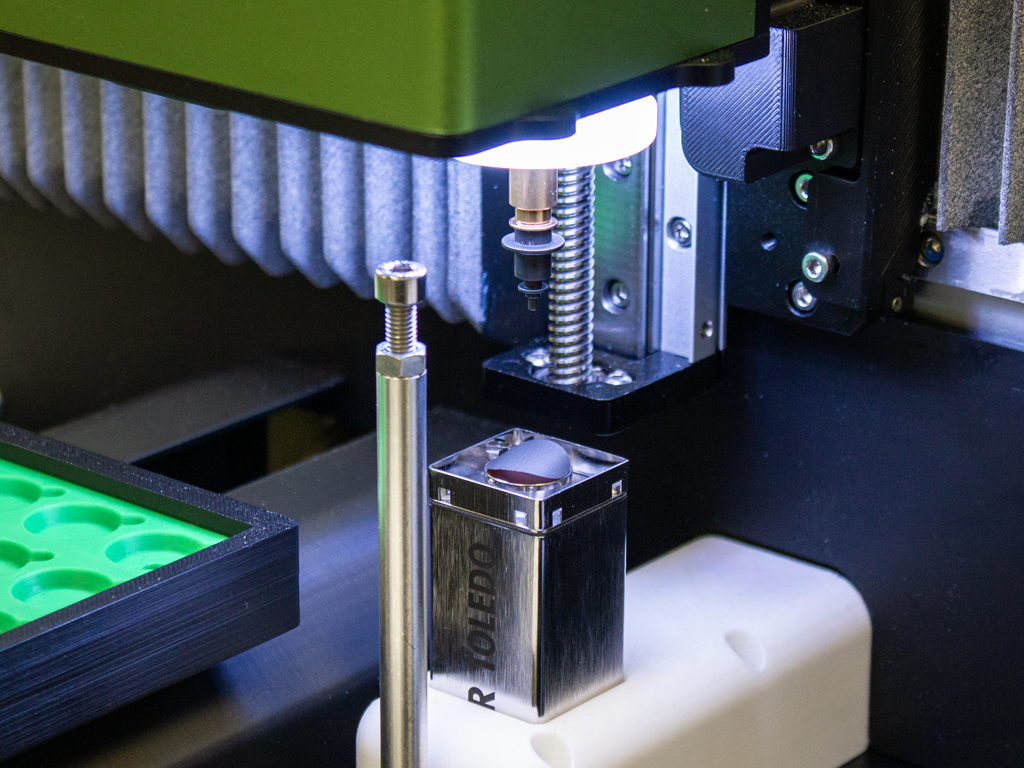
The weighing provides automated electrode mass measurement, supporting consistent sample characterisation prior to cell assembly.
Microbalance: Mettler Toledo SPC115-111
Resolution: 0.01 mg
Accuracy: ± 0.1%
Repeatability: ± 0.5%
Features
Designed for Accuracy
Minimal manual handling reduces the risk of damaging delicate electrode coatings.

High Throughput
Processes hundreds of samples per week, reducing manual workload and increasing lab productivity.

Seamless Integration
Prepared electrode discs are ready for direct insertion into the CASS.

Why choose the E-PREP?
Maximise Efficiency: Free up skilled staff for high-value research tasks.
Improve Data Quality: Consistent, repeatable sample preparation improves research reliability.
Reduce Manual Errors: Automation minimises human error in the electrode preparation process.
Simplify Your Workflow: Seamless integration with the CASS for a streamlined lab experience.
Specifications
Additional Modules
Resistance Measurement (Hioki)
The resistance measurement system integrates a Hioki RM2610 probe to characterise electrode coating properties and interface resistance.
Probe: Hioki RM2610
Measurement Parameters: Composite resistivity (Ωcm) and interface resistance (contact resistivity) between the composite layer and current collector (Ωcm²)
Number of Probes: 46

FAQs
What electrode sheet size does the E-PREP accept?
The system is designed for electrode sheets up to 10 × 15 cm.
What electrode formats can the E-PREP cut?
The E-PREP system is optimised for:
• Coin cell electrodes
• Protocell electrodes
It does not cut rectangular pouch cell electrodes. The cutting geometry is circular only.
How many electrodes can be cut from one sheet?
Typically ~18 electrodes per sheet, depending on:
• Electrode diameter
• Spacing required between cuts
• Material handling considerations
How precise are the cutting dies?
• Dies are EDM machined
• 2 µm machining tolerance on the radius
This ensures highly consistent electrode area and edge quality, supporting improved electrochemical reproducibility.
How is electrode thickness measured accurately if sheets are curled or uneven?
The system includes a sheet holder that also acts as a clamp.
For curved electrodes, the gauge contains a small internal spring that compresses the electrode against a steel block.