Protocell

Protocells combine coin-sized electrodes with pouch style architecture to enable advanced electrochemical characterisation in a flexible format. With external stack pressure control and the easy addition of a thrid reference electrode, the Protocell provides greater insights into interfacial behaviour and performance.

Coin Cells in a Pouch

Test coin cell type electrodes in our new pouch format

Protocells enable unparalleled control and accuracy in electrochemical testing. Developed to bridge the gap between traditional coin cells and pouch cells, Protocells allow direct control of pressure and electrolyte volume, whilst also enabling reference electrode integration, and easy disassembly for post-mortem analysis. Cellerate’s Protocell format has been adopted by leading research institutions, and material developers, offering a more representative and scalable testing environment for next-generation battery chemistries.
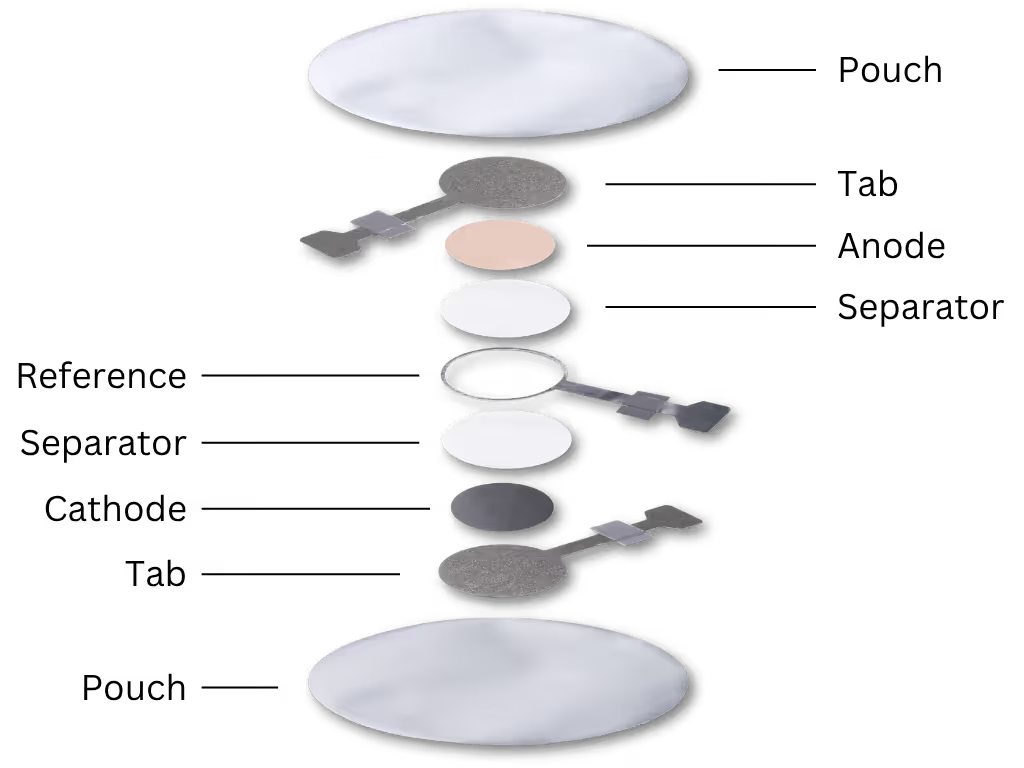
Exploded diagram showing multiple circular and handle-like layers stacked vertically against a black background.

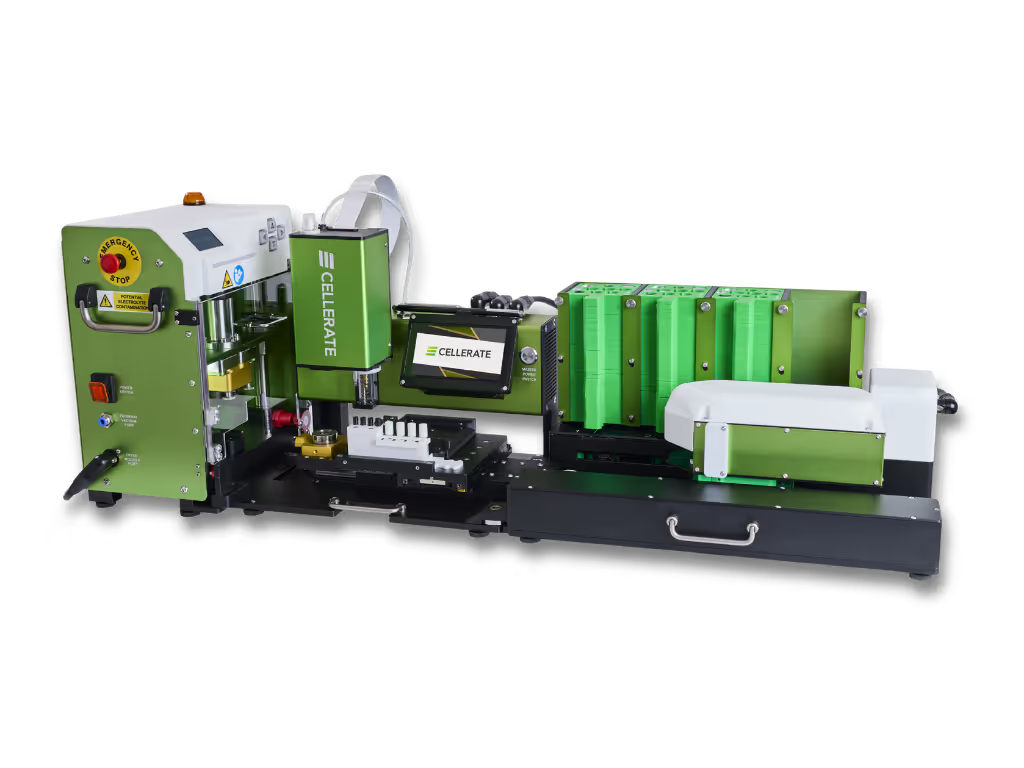
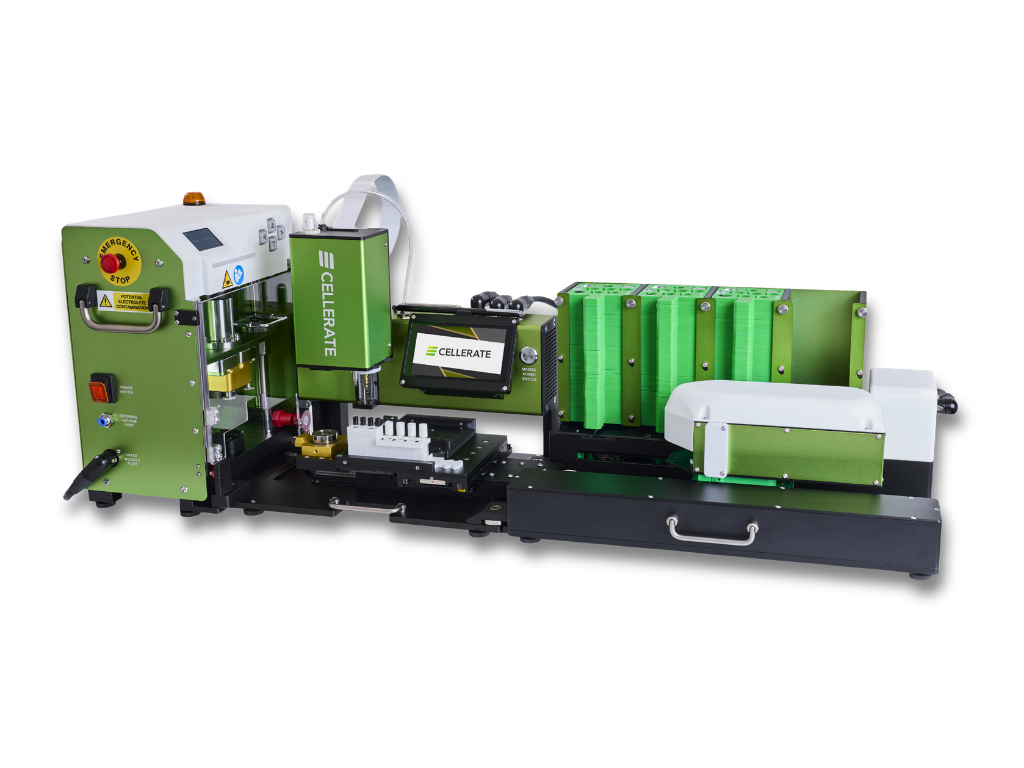
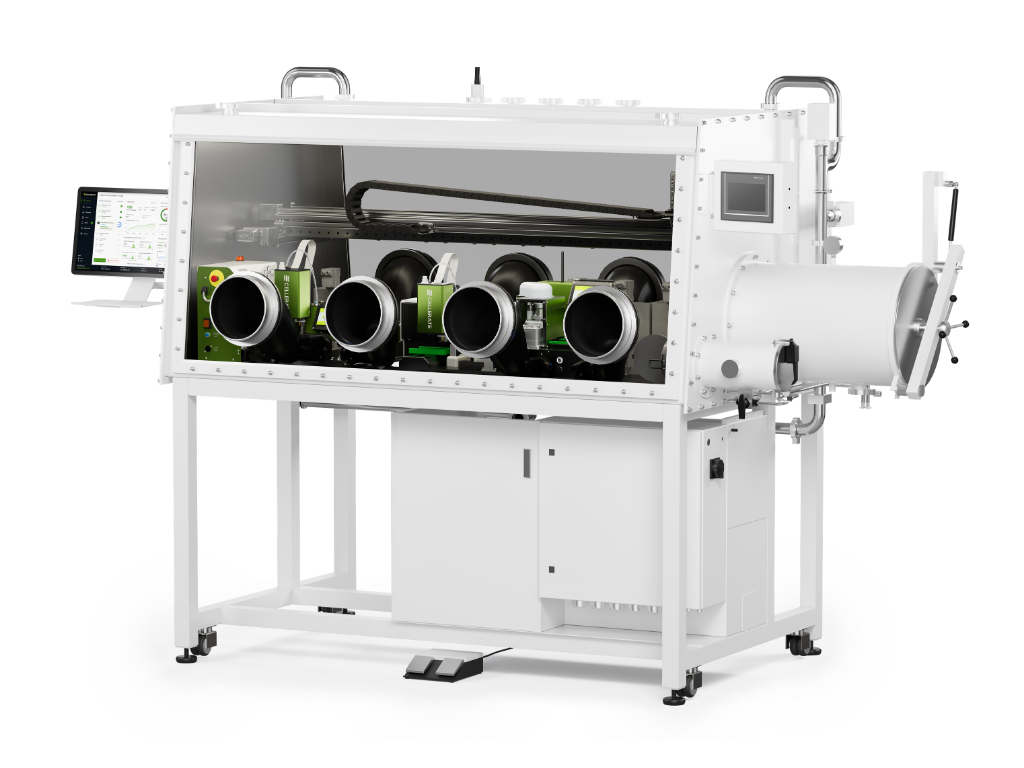
Automatically Assemble Protocells With The CASS
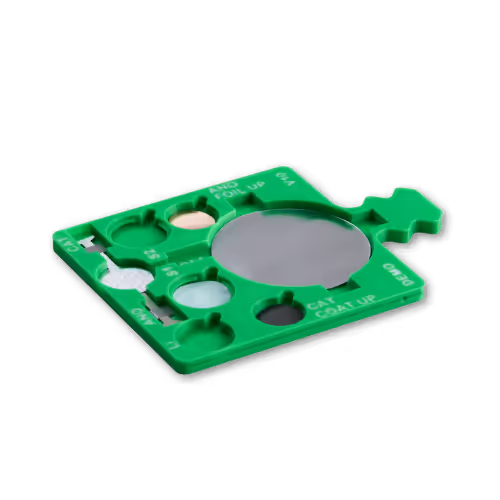
Green plastic protocell tray with multiple circular wells and a central grey reflective disc.Green circular button with a black right-pointing arrow in the centre.Green and black laboratory instrument with digital touchscreen labelled Cellerate, featuring multiple compartments and tubing for scientific processing.Green circular button with a white right-pointing arrow in the centre.Green plastic tray with several circular slots and a central large circular part, used for organizing or holding small components.

Why Protocells?

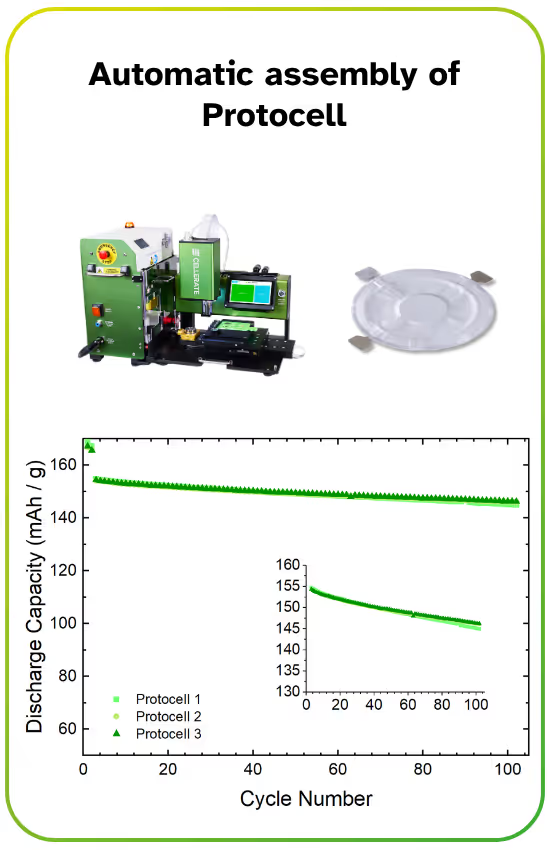
Protocells are engineered to overcome the inherent limitations of coin cells, offering a superior data-driven approach for evaluating electrode and electrolyte performance. Their pouch-style architecture and external stack pressure control leads to data that is more representative of the commercial scale, allowing researchers to extract quality insights even with small sample sizes.

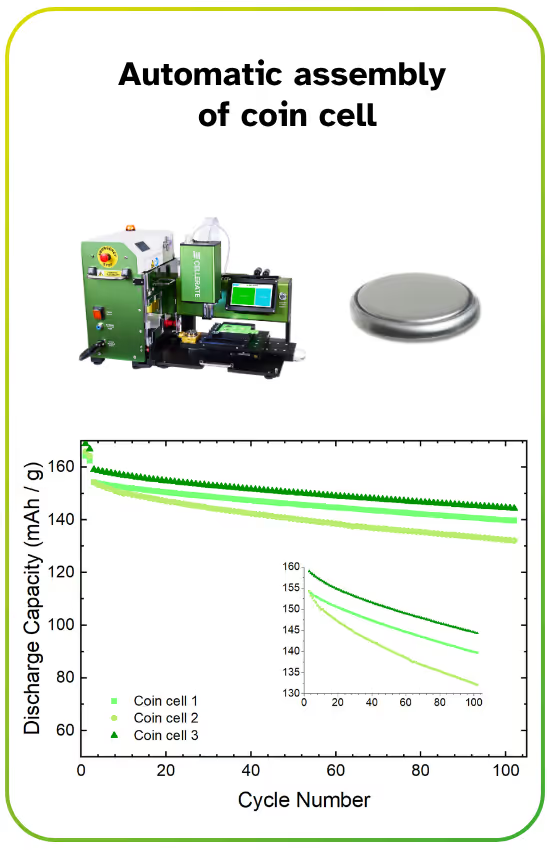
Comparison of Coin Cell vs Protocell Discharge Capacity
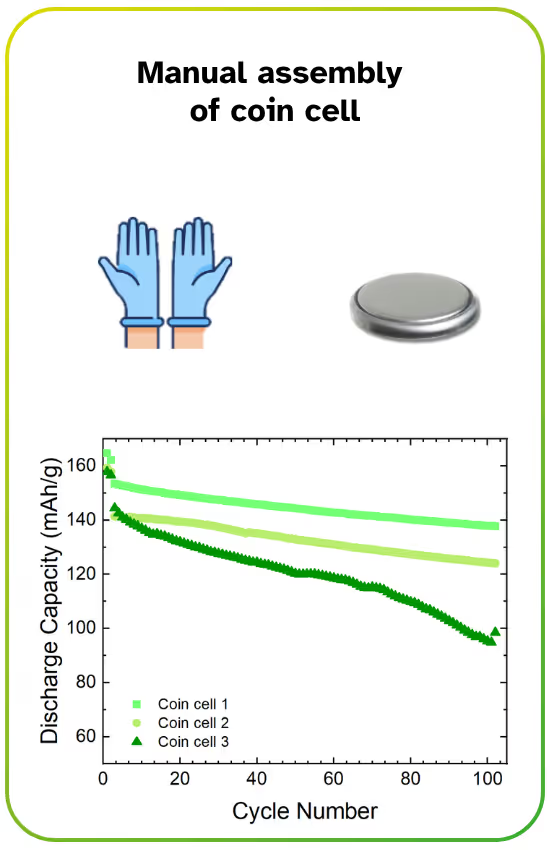
Graph showing discharge capacity (mAh/g) versus cycle number for three manually assembled coin cells, with capacity decreasing over 100 cycles.Graph showing discharge capacity decline over 100 cycles for three coin cells, alongside images of an automatic assembly machine and a coin cell battery.Graph showing discharge capacity in mAh/g versus cycle number for three Protocell samples with a small inset graph, accompanied by an image of an automatic assembly machine and a round Protocell component.

Graphite anode (NEI NANOMYTE BE-200E), NMC-622 cathode (NEI NANOMYTE BE 54E), Celgard separator, 1 M LiPF6 in EC:EMC (3:7) + 1wt.% VC [Solvionic]. Both coin cells and Protocells were assembled using the Cellerate CASS to remove the ‘human factor’. Protocells tested under 0.4 MPa stack pressure.

Protocell Test Holder

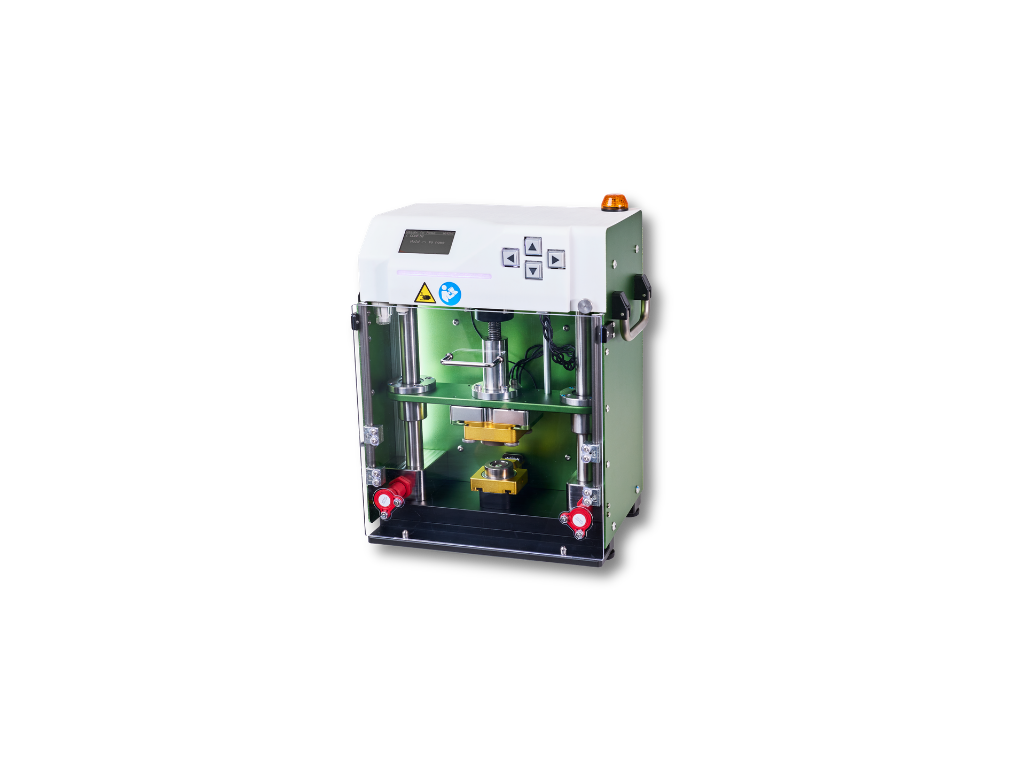
To maximise the capabilities of Protocells, Cellerate offers a specially designed test holder and pressure jig for cell cycling and other electrochemical tests. The Protocell Test Holder ensures stable, long-term electrical contact to anode, cathode, and reference tabs for high-accuracy measurements.

It connects seamlessly to most standard cyclers and enables 2 or 3 electrode configurations with minimal setup. The Protocell Test Holder allows researchers the precise control of the electrode stack pressure, making this ideal for commercially relevant testing, scale-up, and also solid-state battery research.

Metal and green plastic test holder device with a round white membrane filter beside it on a white background.

Protocell Specifications

Pouch Material: 110 µm laminated aluminium, 50mm diameter
Electrode Compatibility: Standard coin cell-sized electrodes (10 mm – 16 mm)
Reference Electrode: Compatible with a range of reference electrodes supplied by Cellerate. The cell can also be sealed without a reference electrode
Separator Size: Up to 19 mm
Tabs: 17 mm contact area, 0.1 mm thick with hot-melt tape – no tab welding required
Sealing Method: Heat-sealed under vacuum (<100mBar)
Integration: Compatible with Cellerate CASS for automated assembly and sealing

Test Holder Specifications

Electrical Connection: 4-point Kelvin with reference tab
Stack Pressure Control: Max 1MPa
Contact Stability: Designed for reliable long-term testing
Environmental Compatibility: Suitable for use inside environmental chambers

Consumables

Metal ring lifter with a black plastic grip in the middle, used to open pull-tab cans.Flat circular stainless steel paddle with a long handle and a black rectangular grip in the middle.Copper-coloured ring clamp with a black clip on the handle.Wooden paddle with a round head and a black rectangular grip on the handle.

Discover Our Products